Bicycle light R&D and manufacturing since 2009 · OEM / ODM / Buyer Label · Average response time ≤ 3h

Integrated Saddle Rear Light Hafnarfjörður Market

OEM/ODM Precision Optical Engineering • Arctic Sub-Zero Weatherproofing • Direct Factory Export

2009
Engineering Pedigree in Shenzhen
9,350 m²
Dust-Free Production Facility
200,000
Monthly Light Sets Capacity
40%
Client Reorder Rate Across Europe
Engineered Product Portfolio

Integrated Safety Tail & Head Lighting Deployments

Tested rigorously against extreme weather, high salt-mist coastal winds, and freezing moisture barriers for cycling brands, municipal tenders, and specialty distributors.
White Paper: Engineering Integrated Saddle Rear Lights for the Hafnarfjörður Microclimate

Hafnarfjörður, positioned along the rugged southwestern coastline of Iceland within the Capital Region (Höfuðborgarsvæðið), presents a unique and punishing micro-environment for active mobility lighting systems. Navigating the exposed lava fields, harbor-side corridors along Reykjanessbraut, and mixed-gradient peri-urban trails calls for bicycle hardware that fundamentally transcends conventional consumer-grade safety equipment. As an established direct manufacturing enterprise (Shenzhen QUZR Technology Co., Ltd., est. 2009), we examine the structural, thermal, and optical requirements demanded by procurement officers, OEM bicycle assemblers, and performance distributors catering to the Icelandic market.

1. Environmental Stress Vectors in Southwestern Iceland

Maritime salt aerosols driven by relentless North Atlantic gusts interact aggressively with bike components. Standard consumer electronics often succumb to premature dielectric breakdown, contact degradation, or internal housing moisture trapping caused by rapid thermal fluctuations. In Hafnarfjörður, daylight reduces to under 4.5 hours in mid-winter, transforming active cycling lighting from a supplemental safety accessory into a non-negotiable operational lifeline.

  • Salt Spray & Corrosion Fatigue: High electrolytic conductivity in coastal maritime mist requires 6000-series hard-anodized aluminum or fiber-reinforced composite housings (such as Toray T700 carbon matrices) to prevent galvanic corrosion at mounting junctures.
  • Low-Temperature Cell Kinetics: Typical lithium-ion polymer pouch cells experience dramatic voltage drop when operating in temperatures dipping between -5°C and -15°C. Our bespoke BMS (Battery Management System) design incorporates ultra-low internal resistance cells combined with insulated casing architectures to deliver reliable 65+ hour cycle life throughout sub-zero nocturnal commutes.
  • Optical Deflection in Coastal Fog & Sea Spray: Rear warning lights need wider horizontal dispersal profiles (>220° to 300°) combined with engineered Fresnel optical lenses that prevent beam diffraction in heavy precipitation, high-density sea smoke, and blowing snow.

2. The Integrated Saddle Architectural Shift

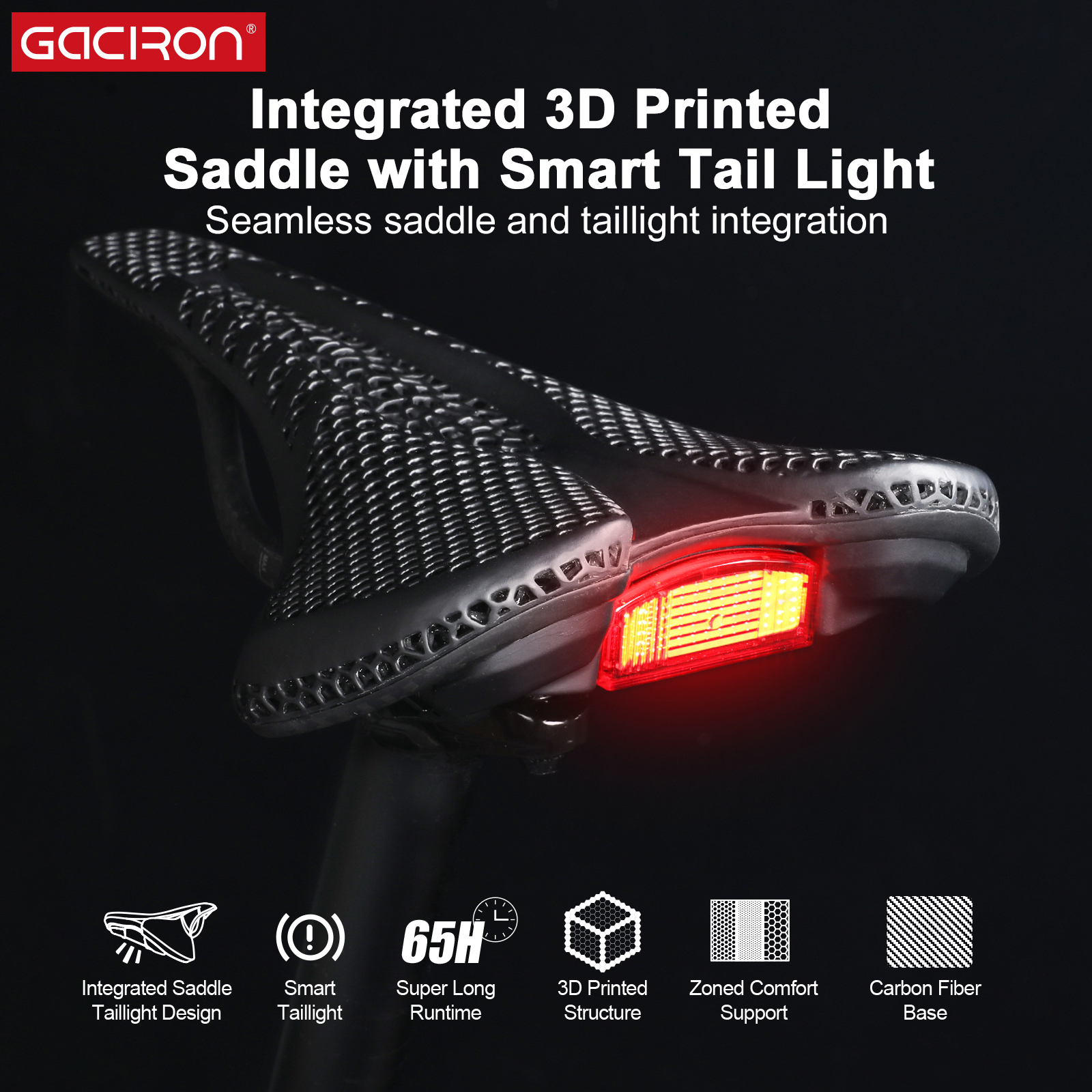
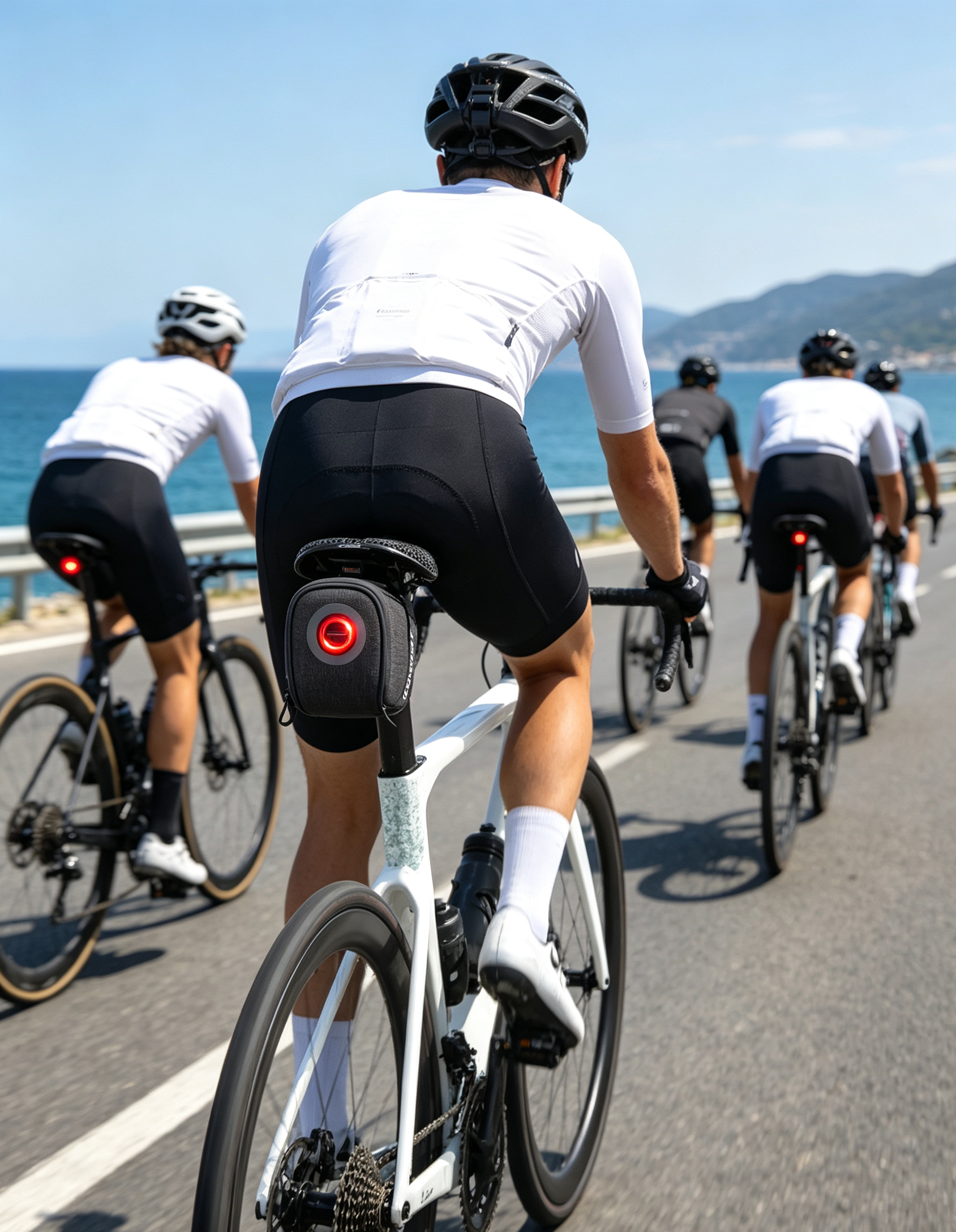
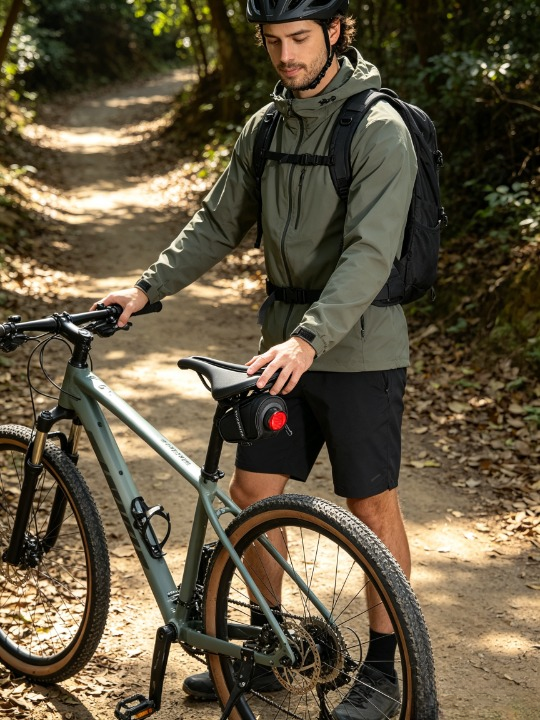
Traditional seat-post clamped lights suffer from significant vulnerabilities in sub-polar utility riding: tire fling loaded with black basalt silt rapidly cakes lenses; bulky winter outerwear or commuter panniers block the line of sight; and sub-zero vibrations inevitably cause post slip. By integrating the rear luminaire cleanly beneath or directly within the structural carbon fiber or polymer saddle rail architecture (as manifested in our EP-143 series and BIRD NEST magnetic quick-swap platforms), the light pattern achieves optimum anatomical elevation while shielding critical components from rear wheel wake.

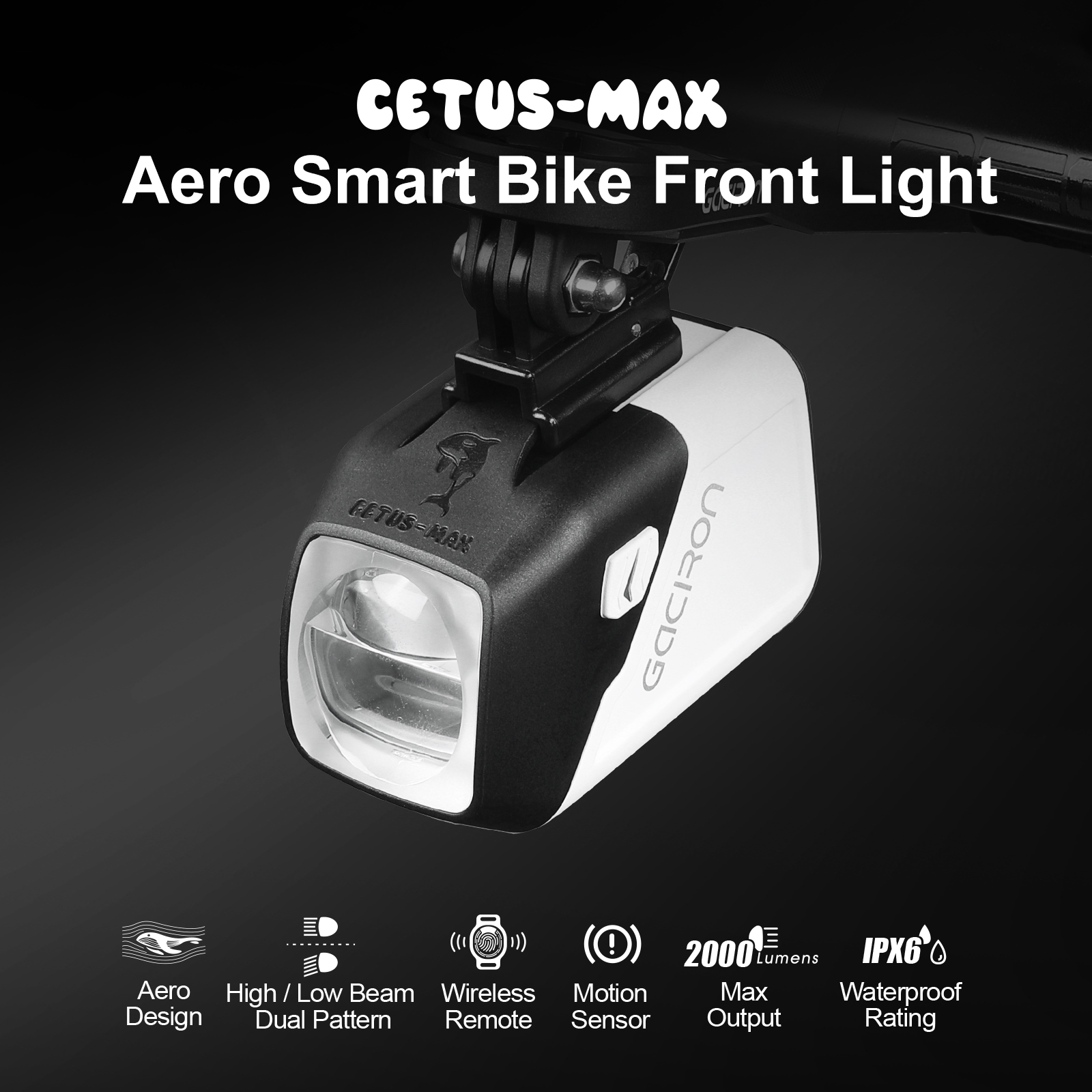
Equipped with solid-state 3-axis MEMS accelerometers, these integrated taillights identify kinetic deceleration within 15 milliseconds, temporarily ramping up the output to 100+ lumens of continuous pulse warning. This instant feedback loop is vital along mixed-use transit arteries like Flatahraun and Fjarðarstræti, warning motorists braking on black ice well in advance.

Application Contexts

Engineered Deployment Scenarios across Hafnarfjörður

From harbor cargo routes to cross-country gravel traverses, explore how custom mounting and optical dispersion meet specific local use cases.

Harbor Commuting & Coastal Arteries

Biking the coastal paths linking Hafnarfjörður harbor with Garðabær exposes gear to damp sea breezes and intense road spray. IPX6 water-jet certified seals and dual-injected TPU housings protect internal circuits from wet, salty slop.

Dark-Winter E-Mobility Fleet Integration

With Icelandic municipal initiatives promoting year-round utility e-bike transit, our saddle lighting integrates seamlessly with step-down DC converters (6V-48V) or long-capacity standalone lithium packs, maintaining steady output throughout long Arctic nights.

Lava Trail & Mixed-Gravel Touring

Traversing volcanic terrain toward Krýsuvík or the Reykjanes nature reserves brings severe low-frequency vibrations. Our custom T700 carbon rail chassis and magnetic mechanical lock prevent drops and misalignment over broken basalt surfaces.

Local Market Trends: The Nordic Shift to Smart Active Visibility

Analysis of cycling safety mandates across the Nordic Council reveals a decisive transition toward active daytime running lights (DRL) and deceleration-sensing tail assemblies. In municipalities like Hafnarfjörður—where seasonal daylight disparities are stark—fleet operators and retail brand buyers are abandoning disposable battery accessories in favor of robust, sustainably integrated components.

Commercial trends shaping procurement specifications include:

  • Type-C Universal Sealed Charging: Icelandic consumers expect ruggedized, cold-flexible rubber ports or contactless magnetic terminals, removing water ingress pain points in snowmelt environments.
  • Anti-Dazzle Collimation: Following widespread adoption of European beam compliance conventions, tail optics are engineered with structured cutoffs to illuminate horizontal visual planes without blinding cyclists following behind in single-file groups.
  • Lightweight Structural Integration: Demanded by the rapid expansion of gravel racing and lightweight carbon e-road bikes across Iceland, the combination of seating chassis and taillight eliminates messy clamp clusters while boosting overall aerodynamic efficiency.
Procurement Insights

Frequently Asked Questions: Hafnarfjörður & Nordic Buyers

Clear, direct answers regarding logistical timelines, temperature durability ratings, and custom manufacturing runs.

How do these integrated saddle lights withstand Icelandic sub-zero winters? +
Our products are built around low-temperature battery chemistry that keeps over 80% capacity at -10°C, paired with custom silicone gaskets and ultrasonically welded casings. Internal microcontrollers are coated in dielectric conformal varnish, stopping thermal cycling condensation from short-circuiting the board.
What are the lead times and shipping terms for delivery into Iceland? +
We handle flexible international commercial terms including FOB Shenzhen, CIF Eimskip/Samskip coastal terminals in Reykjavík, and expedited DDP air-cargo options. Standard batch production schedules average 25–35 days, while stocked OEM samples can dispatch via express within 48–72 hours.
Can we request customized mounting interfaces for proprietary saddle rails? +
Yes. Our in-house facility houses over 50 precision CNC machines along with custom injection tooling lines. We regularly manufacture tailored brackets for oval 7x9mm carbon rails, standard 7mm round chromoly tubes, and direct integrated bolt-on architectures for European saddle designers.
What is the minimum order quantity (MOQ) for custom brand labeling? +
Standard catalog inventory runs accept minimum orders starting at only 20 pieces. For buyer-label packaging, custom optical lens engravings, or specialized firmware programming (such as Nordic-specific flashing cadences), OEM MOQs generally start at 500 to 1,000 units per model run.
How does the smart brake sensor prevent false alerts on rough lava gravel? +
The 3-axis accelerometer firmware uses a high-pass frequency filter. It filters out high-frequency road vibrations, washboard gravel chatter, and vertical pothole impacts, only triggering the high-lumen brake warning on genuine horizontal deceleration vectors.
Factory Competence

Shenzhen QUZR Technology: Manufacturing Advantages

Direct access to source manufacturing eliminates distributor markup while guaranteeing complete control over quality and optical engineering.

Rigorous Optical & Environmental Labs

Every product batch passes strict testing: integrating sphere lumen verification, thermal shock chambers (-30°C to 65°C), continuous water immersion baths, and drop-impact resistance tests.

High-Throughput CNC Machining

Operating more than 50 CNC centers allows us to produce complex structural shapes, high-tolerance heat sinks, and aerodynamic aluminum housings directly from CAD drawings with consistent precision.

End-to-End OEM/ODM Customization

From initial optoelectronic board layouts and plastic mold injection to bespoke retail packaging and international export certification (CE, RoHS, FCC), our engineering team takes care of every step.

Connect with Our Engineering & Export Division

Request comprehensive sample runs, OEM catalogs, or custom optical design quotes tailored for Nordic regional distribution.

Inquire Now