Featured Flagship Products
Direct from Shenzhen QUZR Technology — Engineered for Road, MTB, and Commuter Brands
Executive Whitepaper: Modern Bicycle Illumination & Carbon Engineering
Analyzing Structural Carbon Composite Enclosures, Cutoff Refractive Optics, and OEM Sourcing Dynamics
The global cycling accessories market has undergone a fundamental architectural shift. No longer viewed merely as passive safety add-ons, bicycle lighting systems have evolved into high-performance, integrated electronic safety hubs. Driven by the mass adoption of high-performance road bikes, gravel platforms, and e-bikes, international procurement managers and brand managers face unprecedented demands. Today’s consumers insist on ultra-lightweight carbon fiber integration, optical beam compliance (such as German StVZO anti-glare requirements), intelligent deceleration sensing, and extreme weatherproofing (IPX6 rating or higher).
This B2B sourcing whitepaper provides a authoritative technical evaluation of China's top bicycle light manufacturing ecosystem, focusing specifically on how leading producers like Shenzhen QUZR Technology Co., Ltd. (operating the renowned Gaciron heritage line) integrate cutting-edge materials science, optoelectronics, and automated mass assembly to deliver unmatched competitive advantages for international importers.
1. The Mechanical & Thermal Breakthrough of Carbon Fiber Enclosures
Historically, high-lumen LED bike lights (exceeding 1000 to 3000 lumens) relied heavily on extruded or CNC-machined 6061/7075 aluminum casings. While aluminum offers excellent thermal conductivity, it imposes significant weight penalties and visual disharmony on premium carbon fiber cycling framesets. The primary barrier to using carbon fiber composites in illumination hardware was always heat dissipation: high-power LEDs generate substantial junction heat that, if unchecked, degrades diode efficiency and severely shortens lithium battery lifespans.
Leading Chinese OEM/ODM factories have solved this engineering dilemma through hybrid thermal engineering:
- Internal Copper Substrate Heat Sinks: Direct copper thermal pathways channel heat rapidly away from CREE/Luminus LED chips into an internal micro-finned aluminum core.
- 3D Molded Toray Carbon Composite Sheaths: Lightweight carbon structural shells enclose the core, offering superior tensile strength, impact absorption against trail debris, and seamless aesthetic integration with high-end carbon cockpits.
- Dynamic NTC Thermal Throttling: Embedded firmware continuously monitors driver board temperature, adjusting micro-amperage output dynamically without visible flickering to maintain thermal equilibrium below 60°C.
2. Optical Engineering: Cutoff Beams vs. Raw Lumen Output
A common pitfall in international procurement is evaluating headlights solely on raw lumen figures. Modern regulatory landscapes and commuter safety expectations prioritize effective lux distribution and anti-glare cut-off geometry.
Traditional high-lumen flashlights throw cone-shaped symmetrical beams that blind oncoming traffic, pedestrian traffic, and fellow cyclists—creating severe hazards on shared pathways and urban corridors. Modern OEM manufacturing centers employ advanced optical simulation software (such as ASAP and TracePro) to produce complex refractive TIR (Total Internal Reflection) optical lenses.
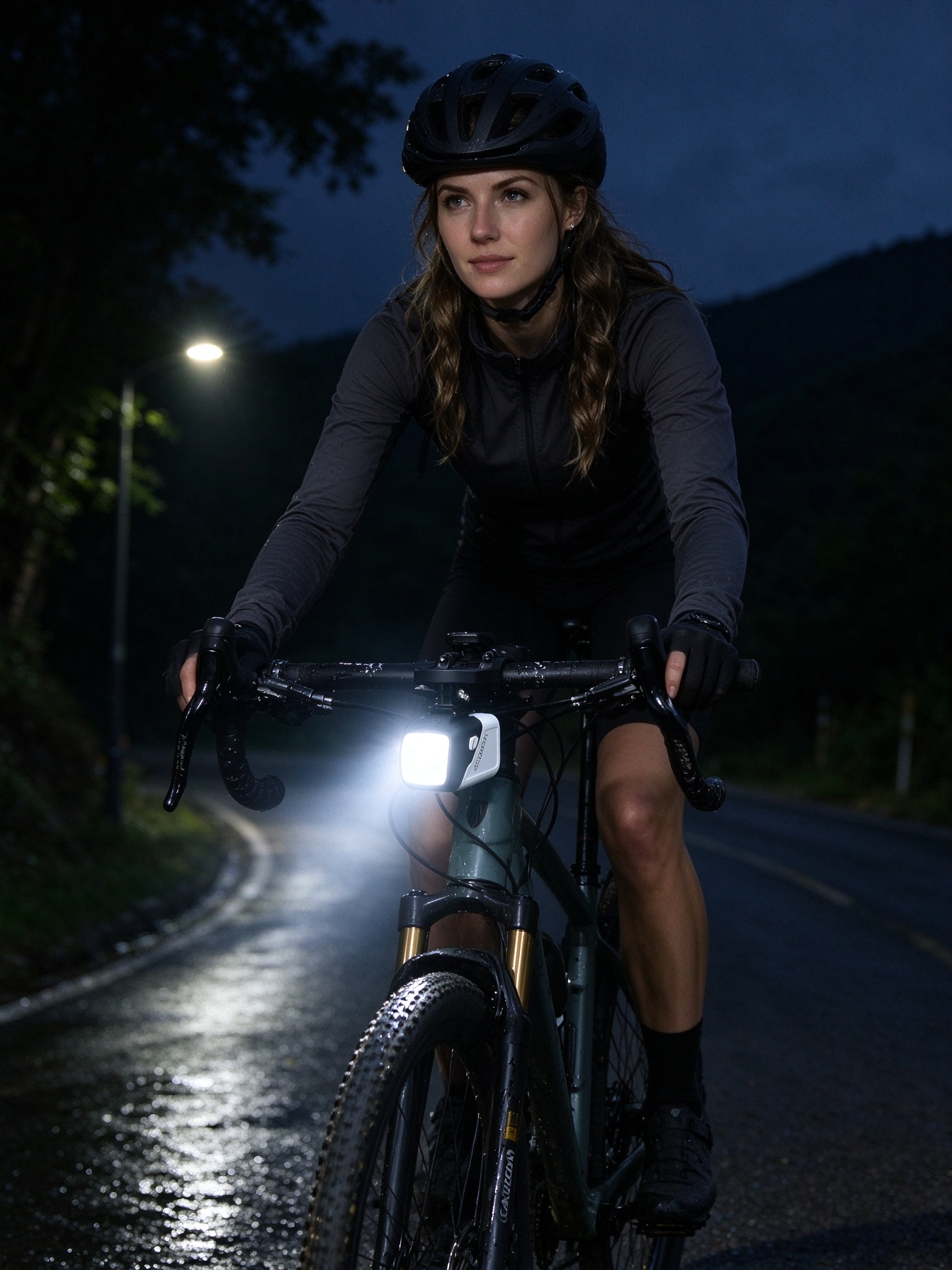
As seen in systems like the KIWI and CETUS series, shaped optical cut-off lines reflect upper light rays downward onto the asphalt. This creates a uniform, wide-angle carpet of light spanning 120 degrees ahead of the rider while leaving the eye level of oncoming motorists completely unglared. Delivering 1700 to 2000 lumens under a strict optical cut-off regime ensures compliance with international road safety guidelines while maximizing effective road illumination per watt of battery power consumed.
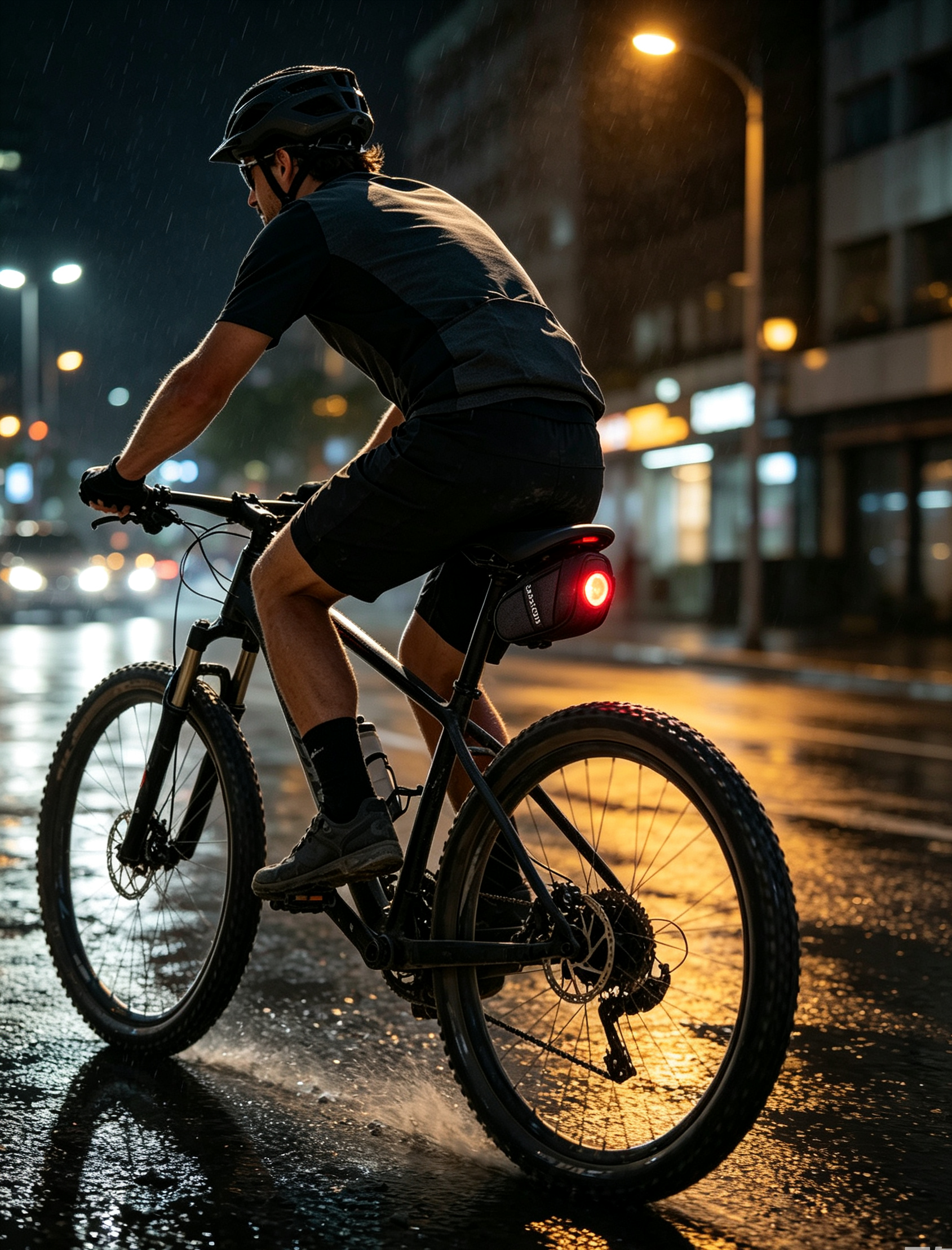
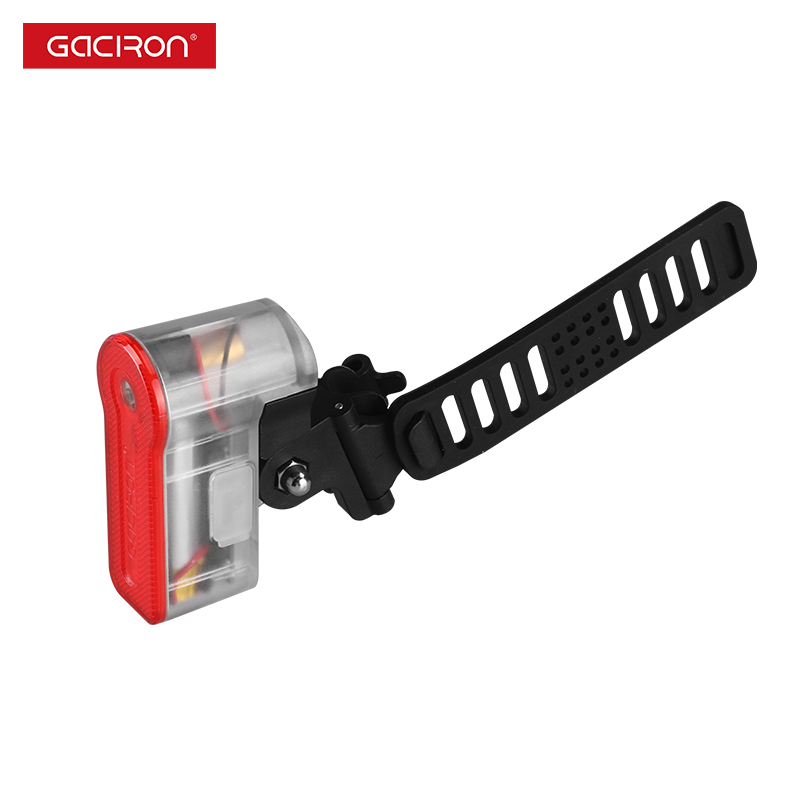
Smart brake tail lights utilize precise 3D motion detection algorithms to distinguish road vibration from deliberate deceleration, firing a 200 LM burst instantly during braking.
Precision sonic welding and silicone double-lip seals ensure full functional integrity against torrential rainstorm jets and high-pressure mud washdowns.
Patented auto-locating magnetic docks provide secure mechanical locking even on rough cobblestones while allowing sub-1-second removal for recharging.
Global Procurement & Industry Trends (2025–2030)
Anticipating Market Shifts for B2B Importers, Distributors, and OEM Brand Owners
To maintain market leadership, cycling brands must align their product roadmaps with macro trends currently transforming the industry. Sourcing directors should prioritize factory partners that invest heavily in the following four technology vectors:
Trend 1: Ecosystem Integration (Bags, Saddles, and Lighting Hubs)
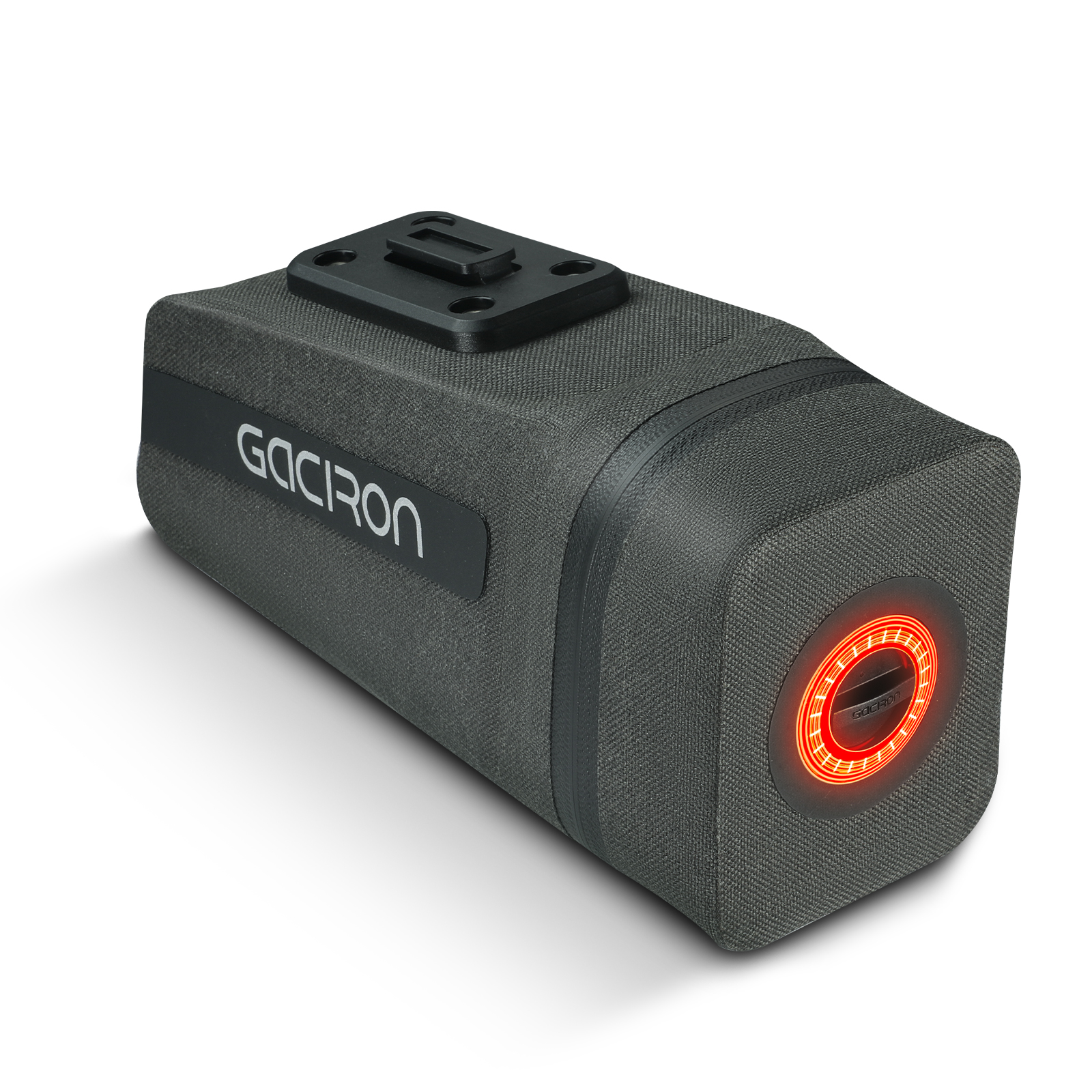
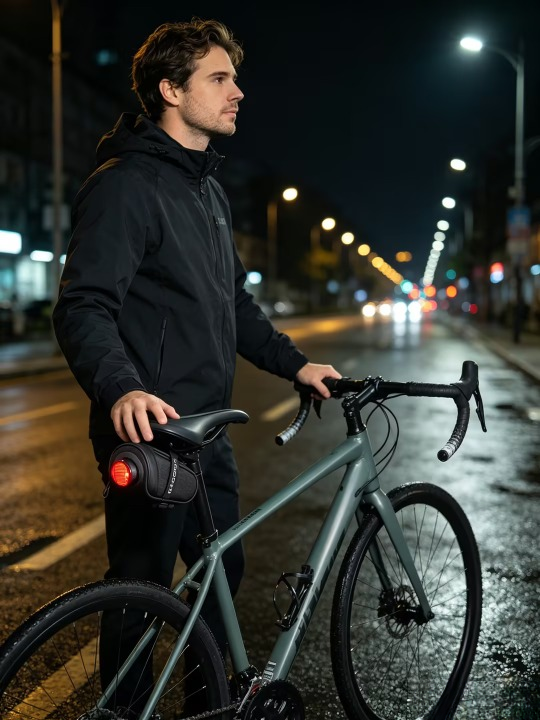
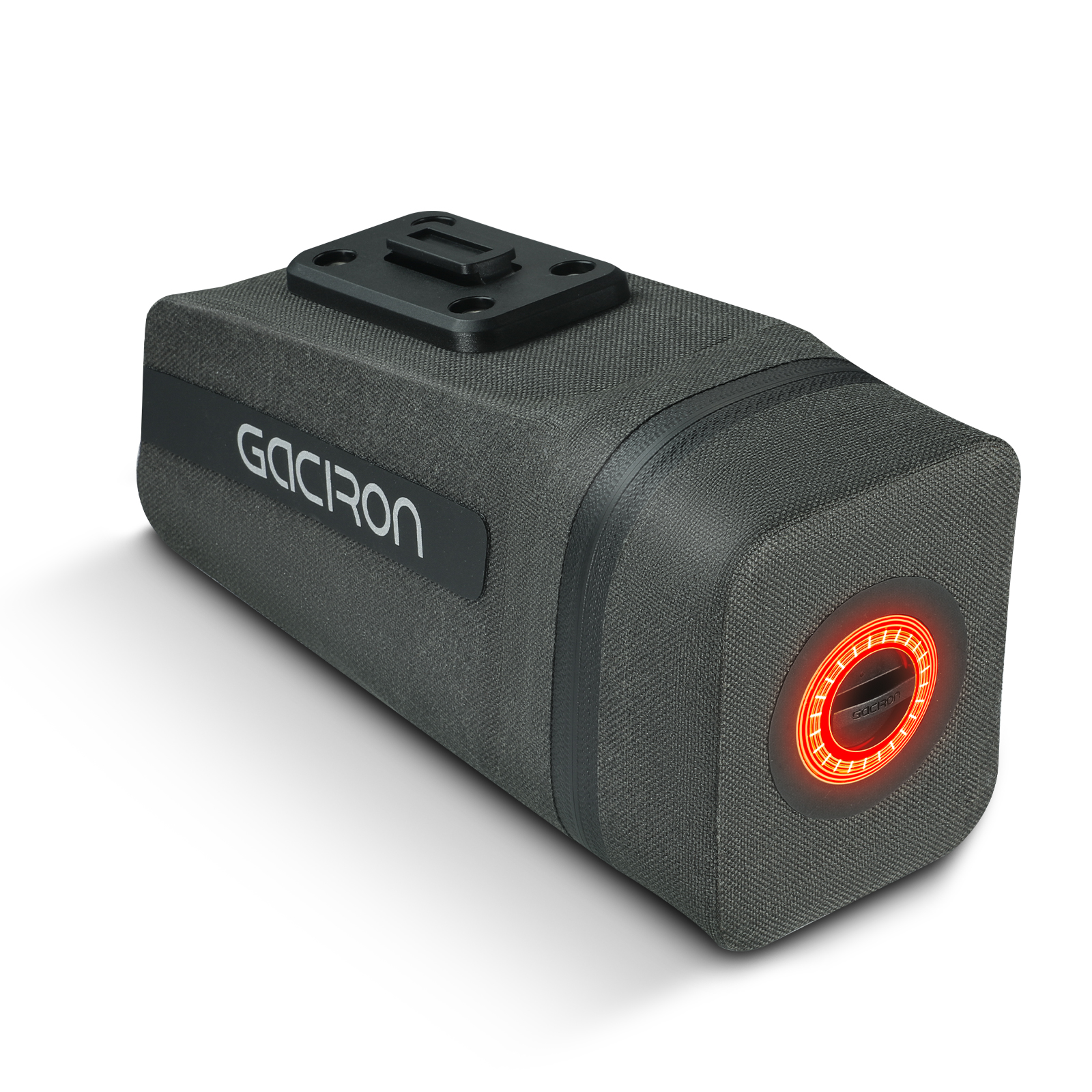
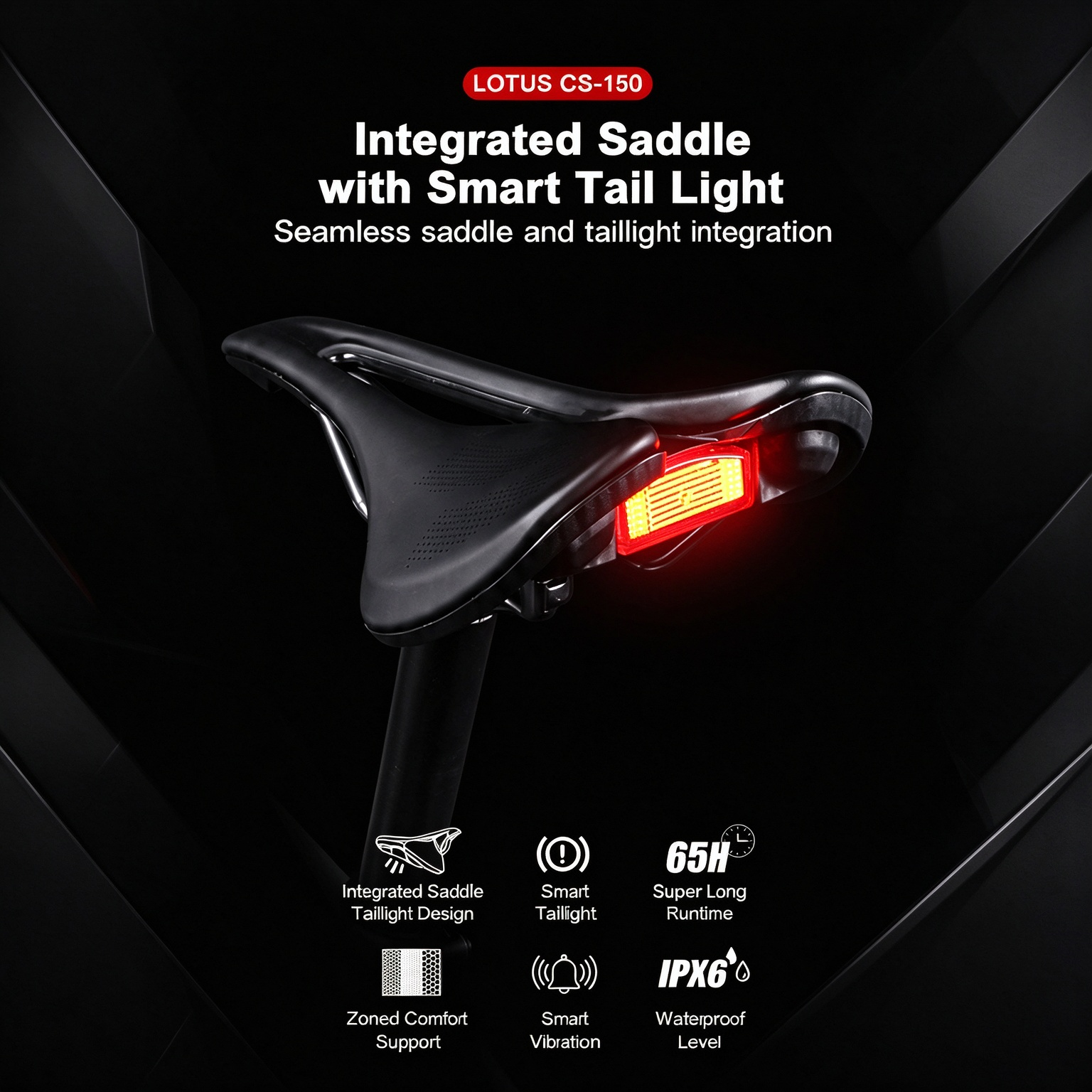
Stand-alone lights mounted with rubber bands are rapidly yielding market share to integrated storage and seating solutions. As demonstrated by the Gaciron Bird Nest Bag Series and 3D Printed Saddle Systems, embedding rechargeable smart brake lights directly into waterproof TPU saddle bags and 3D-printed honeycomb saddles creates a clean, streamlined aesthetic. It reduces cockpit clutter, eliminates mounting hardware slippage, and offers consumers an all-in-one functional purchase.
Trend 2: Smart Laser Lane Projection & Radar Integration
Urban safety demands visual boundary enforcement. Emerging safety devices incorporate side-mounted laser diodes that project bright, highly visible laser lane lines onto the asphalt flanking the cyclist. This creates a clear visual "virtual lane" that encourages overtaking motor vehicles to pass at a safe distance. Furthermore, integrating low-power 24GHz mmWave radar sensors allows taillights to detect approaching rear vehicles up to 140 meters away, alerting the rider via connected handlebar units or smartphones while automatically increasing taillight strobe frequencies.
Trend 3: USB-C Power Delivery & Reverse Power Bank Capabilities
High-capacity bike lights featuring 6700mAh to 10,000mAh internal high-density 21700 lithium-ion battery cells now double as emergency power banks. Through bidirectional USB-C PD (Power Delivery) microchips, gravel and bikepacking riders can charge GPS bike computers, smartphones, or electronic shifting batteries directly from their bike headlight while riding in remote regions.
Trend 4: E-Bike CAN-Bus Direct Voltage Compatibility
With global electric bicycle sales expanding rapidly, headlight and taillight manufacturers are transitioning driver circuitry to handle wide DC input voltages (6V to 60V). Direct integration with Bosch, Shimano, and Bafang motor drive systems enables automated lighting control directly from the e-bike central handlebar display, bypassing self-contained batteries entirely.
| Category Segment | Target Output / Spec | Primary Material Focus | Key OEM Customization Point | Primary Market Target |
|---|---|---|---|---|
| Aerodynamic Road Headlight | 800 – 1700 Lumens / Cutoff Beam | Carbon Composite / 6061-T6 | Custom Optical TIR Lens, Custom Logo | Western Europe, North America |
| Off-Road MTB Trail Headlight | 1800 – 3000 Lumens / Wide Flood | Anodized CNC Aluminum | Remote Switch Firmware, Battery Sizing | Australia, North America, UK |
| Smart Brake Taillight | 30 – 200 Lumens / Laser / Motion | TPU Polymer / Carbon Base | Accelerometer Sensitivity, Mount Types | Global Urban Commuter Markets |
| Light-Integrated Gear (Bags/Saddles) | Lightweight Storage + IPX6 Light | Waterproof TPU / 3D Print Matrix | Bag Dimensions, Light Placement, Branding | Bikepacking, Touring, Gravel Users |
Enterprise Advantage: Shenzhen QUZR Technology Co., Ltd.
Inside China's Premier Bicycle Lighting R&D and Manufacturing Hub (Established 2009)
Vertical In-House Production
Operating a sprawling 9,350 square meter modern industrial facility in Shenzhen, QUZR Technology maintains complete end-to-end control over the production cycle. With over 50 high-precision CNC machining centers, automated SMT surface-mount electronics placement lines, and dust-free assembly workshops, we eliminate sub-assembly outsourcing delays and guarantee stringent tolerance compliance.
Rigorous Testing Protocols
Every product design undergoes rigorous quality control testing in our in-house optical and environmental laboratories. Integrating integrating-sphere lumen photometers, high-pressure IPX6 waterproof jet chambers, thermal shock stress testers, and multi-axis drop simulators, QUZR ensures every shipment achieves a 99.8% first-pass yield rate.
Comprehensive OEM/ODM & Buyer-Label Capabilities
Whether you are an established international brand seeking custom carbon fiber tooling, or a growing distributor looking for fast-turnaround private label branding on stock items, QUZR Technology provides flexible commercial terms:
- Low Sample MOQs: Standard inventory models start from as few as 20 units to facilitate rapid market testing.
- Fast R&D Prototyping: In-house optical and industrial design engineers deliver functional 3D working prototypes within 14 business days.
- Global Logistics & Trade Compliance: Complete support for FOB, CIF, EXW, and DDP shipping formats, fully backed by UN38.3, MSDS, CE, RoHS, and FCC international certification compliance.
Procurement & Technical FAQ
Essential Answers for B2B Supply Chain Managers, Importers, and Sourcing Engineers
What is the baseline minimum order quantity (MOQ) for custom brand orders?
How do carbon fiber bike light enclosures handle thermal heat dissipation during continuous high-lumen operation?
What is the difference between IPX4 and IPX6 waterproof certification ratings?
Are your optical cut-off beam headlights compliant with European anti-glare road regulations?
How does the smart brake sensor in your taillights prevent false positives during rough trail riding?
What international export certifications accompany lithium-ion battery shipments?
Can QUZR manufacture direct-wire lights for E-Bike systems?
What are the typical production lead times from PO confirmation to shipping dispatch?
Partner with China's Premier Bike Light Factory
Empower your brand with high-margin, precision-engineered carbon lighting systems and smart cycling accessories. Request our comprehensive 2025 B2B OEM/ODM product catalog and wholesale price list today.