Flagship Wireless Bicycle Lights & Systems
Precision-Engineered Front Headlights, Smart Brake Taillights & Carbon Accessories
Executive Overview: The Shift to Smart Wireless Cycling Illumination
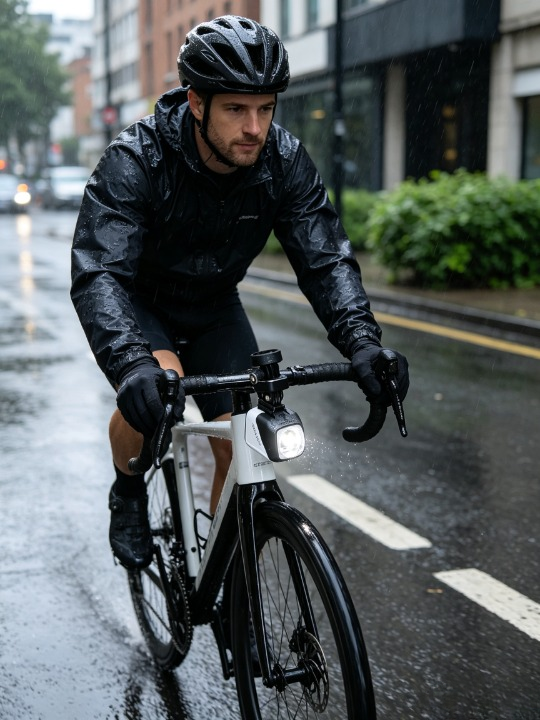
The global market for high-performance bicycle lighting is undergoing a structural transformation. Driven by the expansion of urban commuting networks, the rapid adoption of high-speed E-bikes (Pedelecs and S-Pedelecs), and increased nocturnal mountain biking (MTB), procurement teams can no longer rely on generic LED lamps. Today’s global buyers require sophisticated wireless bicycle lighting systems equipped with smart brake sensors, anti-glare cutoff optics (StVZO compliance), and unified handlebar ecosystem controls.
This industry report acts as a definitive B2B procurement whitepaper for bicycle light importers, brand owners, retail distributors, and original equipment manufacturers (OEMs). Based on operational data from Shenzhen’s leading manufacturing hubs—specifically Shenzhen QUZR Technology Co., Ltd. (operating the premier Gaciron line)—this guide evaluates technical engineering standards, factory production capacity, and strategic supplier selection criteria for 2025 and beyond.
Global Landscape: Top 10 Bicycle Light Manufacturers & Sourcing Tiers
When selecting an OEM/ODM partner for wireless bike lights, procurement managers must evaluate optical design expertise, thermal management capability, firmware stability for smart sensors, and automated SMT assembly lines. Below is an engineering comparison matrix illustrating how top manufacturers perform across core criteria.
| Manufacturer Tier / Region | Primary Technical Focus | Optical Technology | Smart Sensing & Remote | IP Water-Ingress Rating | OEM Customization Depth |
|---|---|---|---|---|---|
| Shenzhen QUZR Technology (Gaciron Hub) | High-Lumen Smart Front Lights & Integrated Carbon Taillights | TIR Cutoff Anti-Glare + High-Transmitting Tempered Glass | 2.4G Wireless Remote + 3-Axis Accelerometer Brake Sensing | IPX6 High-Pressure Water Jet Tested | Full ODM (Custom Tooling, Firmware, Laser Etching, Packaging) |
| Tier-1 European OEMs (Germany/Nordics) | StVZO Dynamically Powered & E-Bike Direct Power Headlights | Mirror-Reflector Asymmetrical Beam Shaping | CAN-bus Integration / Fixed Wired Controls | IPX5 / IPX6 | Low Flexibility / High Unit Tooling Costs |
| Tier-1 Taiwanese Specialized Assemblers | CNC Machined Compact Aluminum Cycling Lights | Standard Multi-LED Reflector Arrays | Bluetooth LE App Synchronization | IPX4 / IPX5 | Medium Flexibility / Moderate Minimum Order Quantities |
| Budget Wholesale Factories (Generic Guangdong) | Low-cost Plastic Flashlights & Basic Rear Flashing Lights | Simple Acrylic Fresnel Magnifiers | Basic Mechanical Switches (No Gyro) | IPX4 or Unrated | Logo Printing Only / Standard Stock Shells |
Information Gain Insight: Sourcing directly from specialized R&D factories like Shenzhen QUZR Technology provides brands with direct access to patented optical housing designs, high-yield SMT circuit assemblies, and lower unit costs without sacrificing strict international compliance standards (CE, FCC, RoHS, REACH, UN38.3 for lithium-ion air/sea freight).
Enterprise Infrastructure: Shenzhen QUZR Technology Co., Ltd.
Established in 2009 in the hardware innovation capital of Shenzhen, China, Shenzhen QUZR Technology Co., Ltd. has grown into an international leader in bicycle accessories R&D and manufacturing. Operating a 9,350 square meter state-of-the-art facility equipped with 8 dust-free automated production lines and more than 50 CNC precision metalworking machines, QUZR delivers a monthly capacity exceeding 200,000 complete bike lighting systems.
In-House CNC Metal Fabrication
Over 50 CNC lathes machine aviation-grade 6061-T6 aluminum alloy housings, ensuring superior thermal dissipation for high-lumen (1000lm - 3000lm) LEDs.
Patented Optical R&D Lab
In-house optical engineers utilize goniophotometers and integrating spheres to engineer anti-glare cutoff beams (StVZO compliant) that eliminate dazzle for oncoming traffic.
Smart Gyroscope Firmware
Custom 3-axis accelerometer algorithm programming allows real-time deceleration sensing, instantly firing 100lm+ brake warnings with high reliability.
Procurement Insights: 4 Major Trends Shaping Bike Light Sourcing
For brand managers and buyers planning product catalogs for upcoming seasons, understanding technological convergence in wireless bike lights is essential for securing market share.
1. Advanced Cutoff Beams & Anti-Glare Asymmetric Refractors
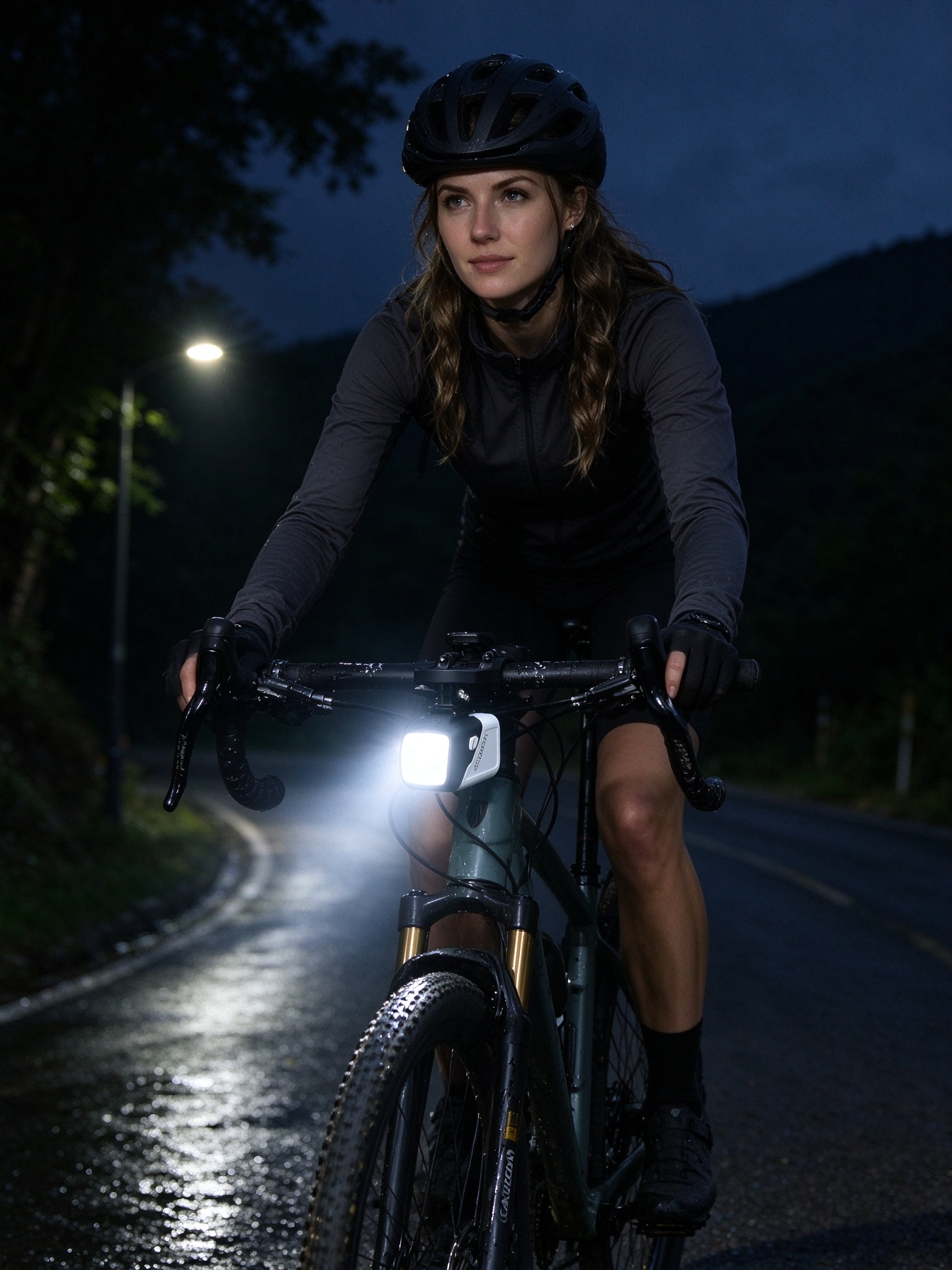
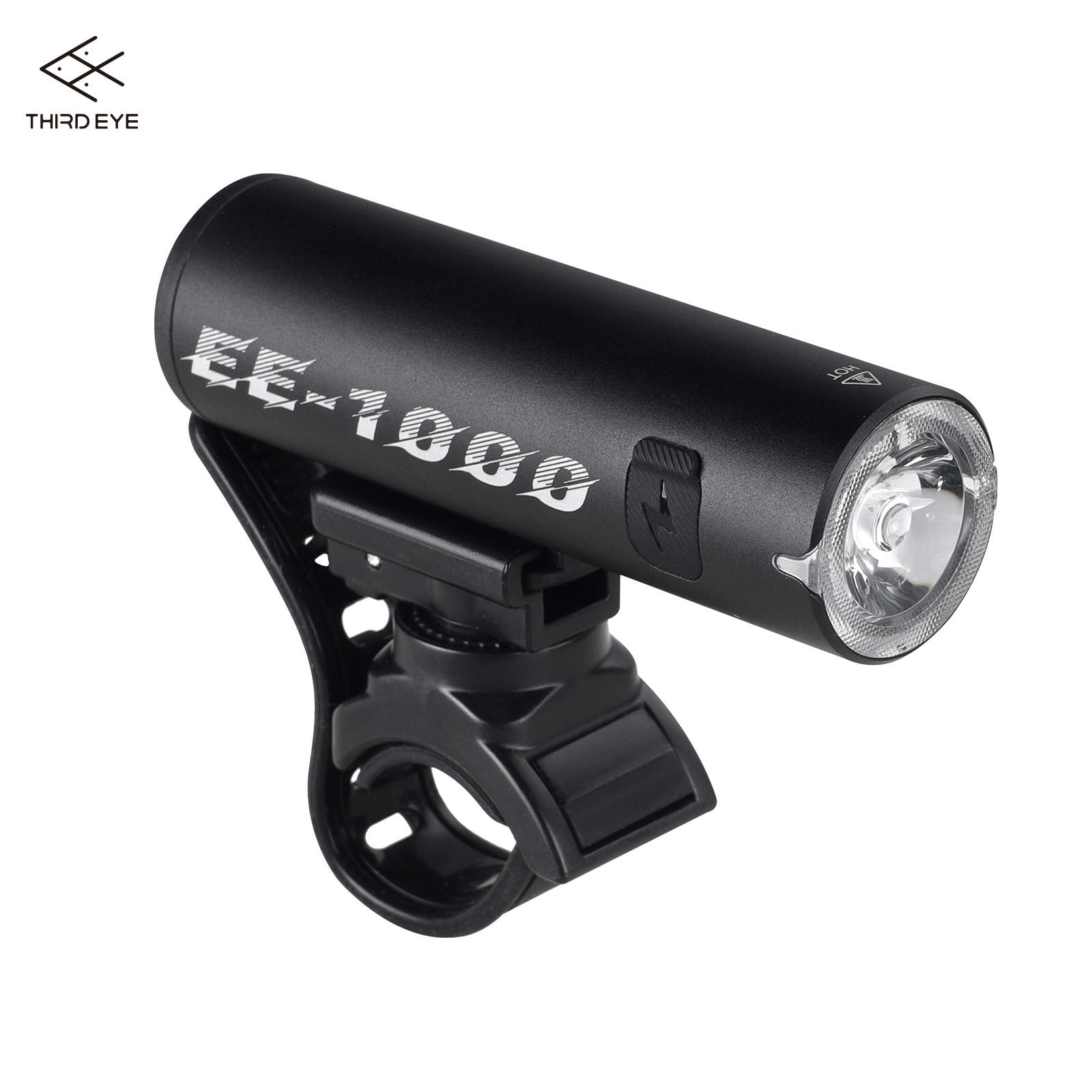
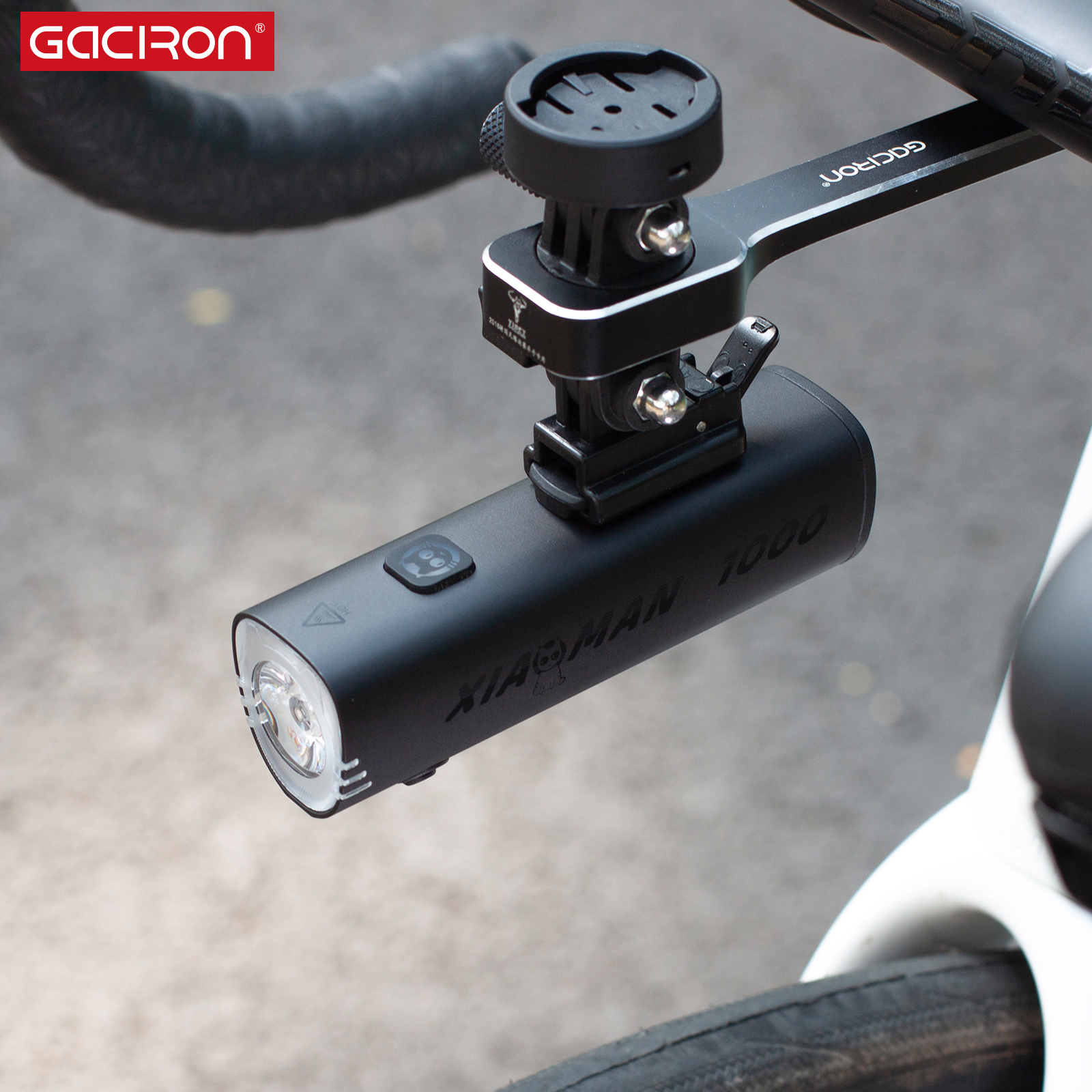
Urban commuters and road cyclists face strict safety mandates across Europe, Japan, and North America. Traditional round flashlights cast unconstrained light into the eyes of pedestrians and motorists, creating hazardous glare. Modern front lights—such as the Gaciron Cetus-Max and KIWI Series—utilize optical-grade polycarbonate TIR lenses that shape light into a crisp horizontal cutoff line. This keeps illumination focused entirely on the road surface ahead (from 5 to 50 meters) while strictly preventing blinding light from rising above waist level.
2. Wireless 2.4GHz Control & Cockpit Integration
Cluttered handlebars reduce steering ergonomics and aesthetics. Wireless remote switches operating on low-latency 2.4GHz RF frequencies allow riders to toggle high/low beams, flash modes, or light intensity without lifting their hands from the handlebar grips or drop bars. Future OEM tenders are increasingly specifying universal quarter-turn (Garmin / Wahoo style) under-mount brackets that consolidate phone mounts, bike computers, and headlights into a single aerodynamic cockpit unit.
3. Smart Accelerometer Brake Sensing & Motion Auto-Sleep
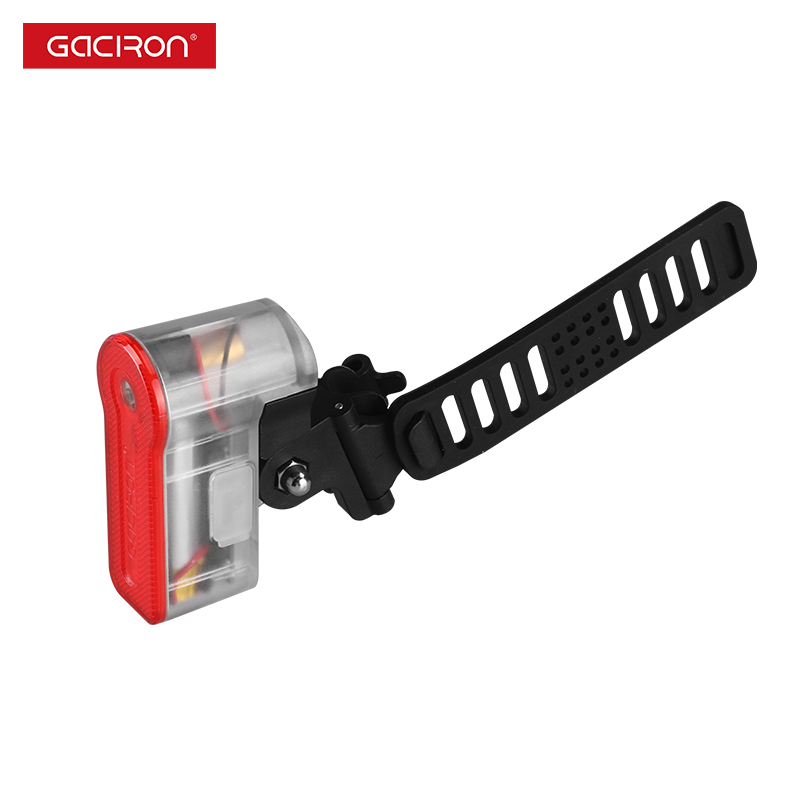
Smart taillights are replacing static flashing LEDs. Using integrated 3-axis MEMS gyroscopes and microcontrollers, lights like the Gaciron EP-143 Carbon and W03AW Smart Laser Taillight detect rapid speed reduction. Upon braking, the unit automatically boosts brightness to maximum output for 2 to 3 seconds. Additionally, intelligent motion sensors switch lights into power-saving sleep mode after 120 seconds of inactivity, waking up instantly upon vibration sensing.
4. Carbon Fiber Structural Integration & 3D Printed Components
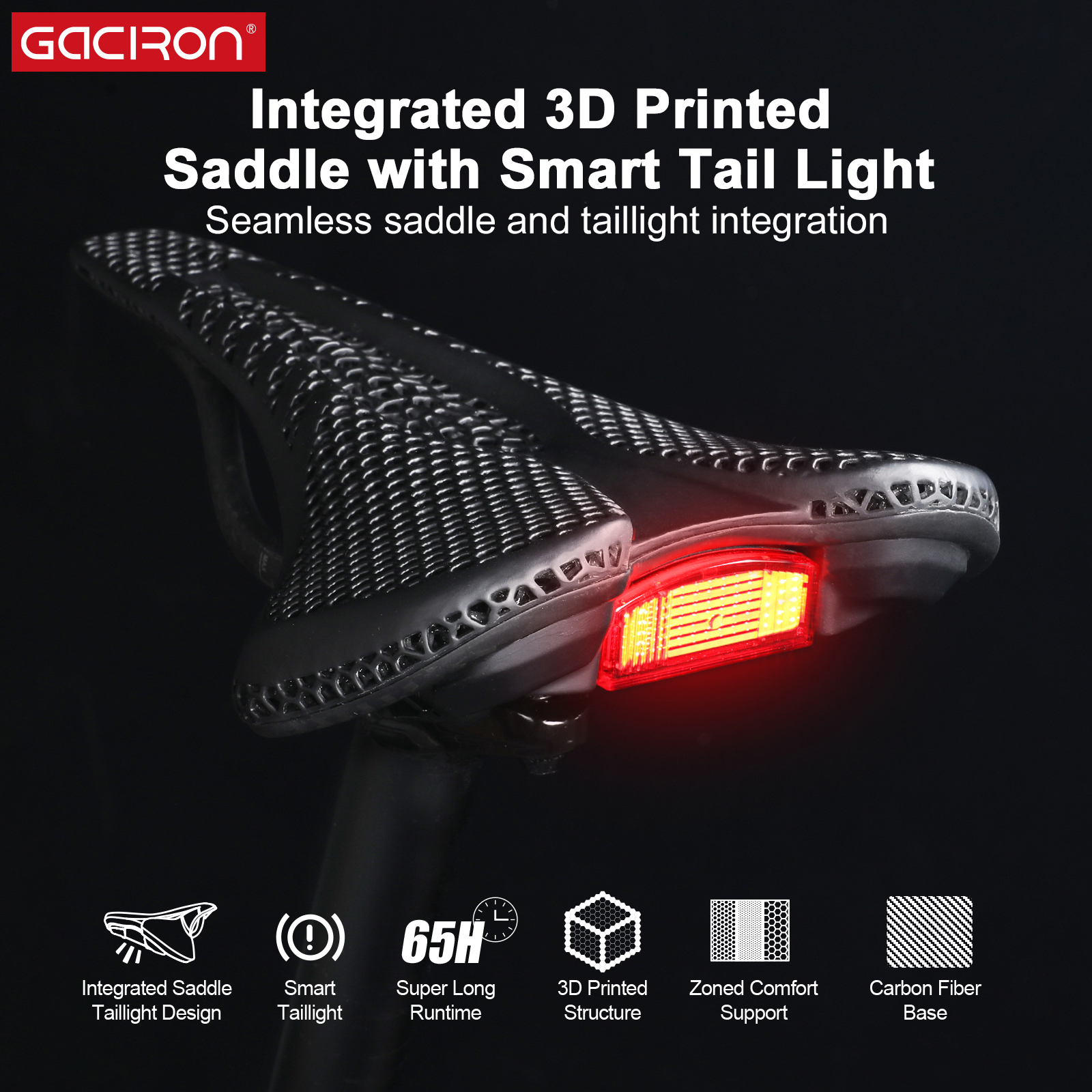
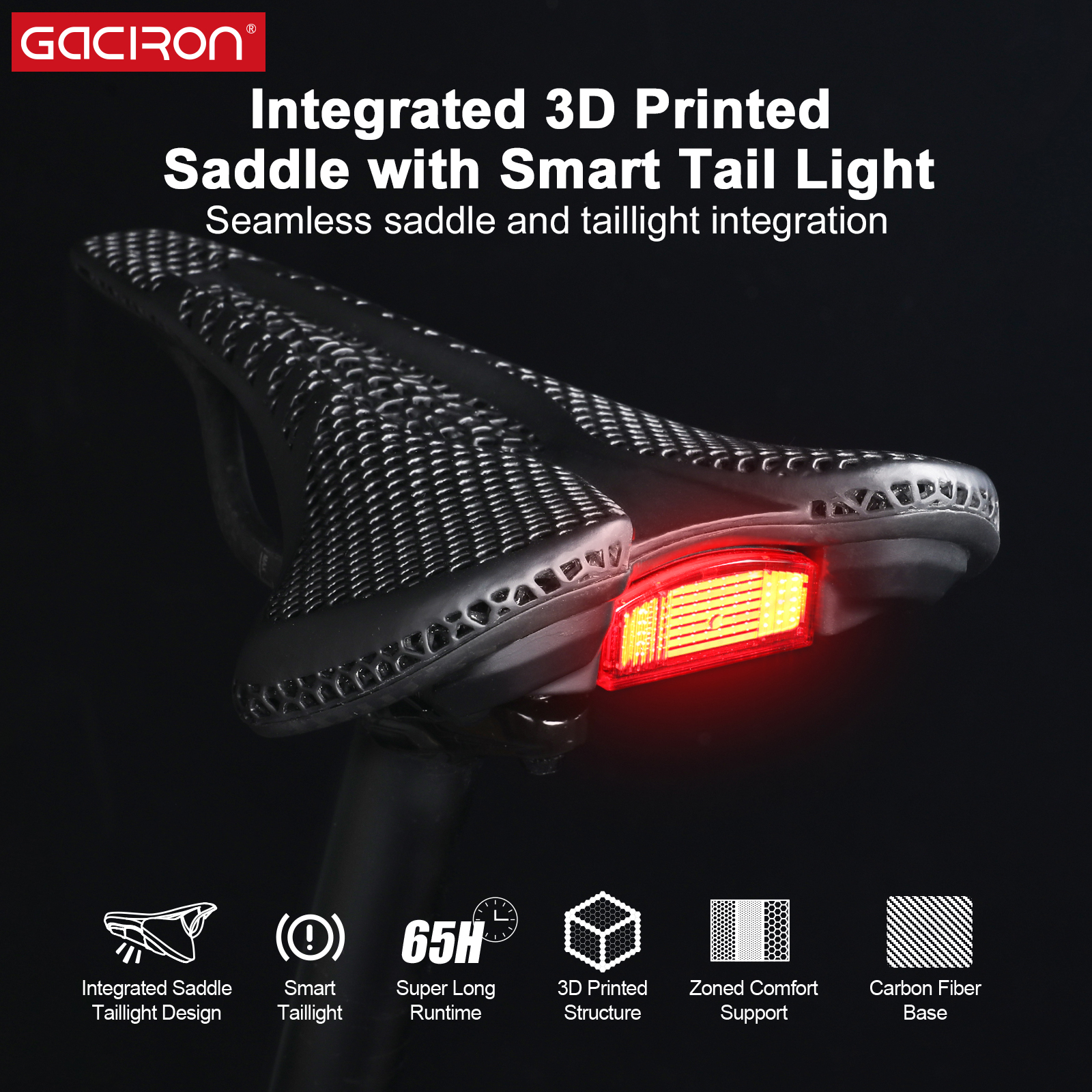
Weight reduction remains a primary purchasing motivator for road and mountain cyclists. Leading factories are now combining carbon fiber weaving (such as TORAY T700) directly into taillight brackets and saddle mounts. Furthermore, integrated products like 3D-printed honeycomb saddles featuring built-in smart rear lights represent the pinnacle of sleek, lightweight component design.
B2B Sourcing FAQ: Frequently Asked Questions by Importers
What is the minimum order quantity (MOQ) for standard vs. OEM custom orders?
For standard Gaciron catalog models, minimum order quantities start at just 20 pieces per SKU, allowing distributors to test local market response. For custom OEM projects involving laser-etched brand logos, custom anodized housing colorways, or customized retail packaging, MOQ typically starts at 500 to 1,000 units depending on tooling requirements.
How does Shenzhen QUZR Technology ensure true IPX6 waterproofing?
Every product enclosure is designed with precision silicone sealing gaskets, sonic-welded lens housings, and waterproof Type-C charging ports. During production, representative batches undergo rigorous high-pressure water jet spray testing in according with IEC 60529 standards, ensuring reliable operation during heavy downpours or high-vibration off-road mud riding.
What battery safety certifications are provided for international customs clearance?
All wireless bicycle lights produced at our factory utilize premium lithium-ion battery cells (including high-density 18650 and 21700 cells up to 5000mAh - 10000mAh capacity) equipped with built-in Overcharge and Overdischarge Protection PCB Circuitry. Full certification dossiers—including UN38.3 transport safety test reports, MSDS material safety sheets, CE, FCC, RoHS, and REACH documentation—are supplied for frictionless customs clearance into North America, Europe, Australia, and Asia.
What is the typical lead time for custom OEM prototyping and mass production?
3D visual renderings and initial prototype samples can be delivered within 7 to 10 working days. Upon sample sign-off and deposit confirmation, mass production lead times range from 25 to 35 days. For urgent reorders of standard inventory items, dispatches can be arranged within 3 to 5 business days.
Can your R&D team develop custom optical beam patterns for specific regional regulations?
Yes. Our in-house optical engineering team specializes in custom TIR lens design and reflector mold development. We can tune beam angles, luminance spread, and sharp cutoff boundaries to comply with specific market regulations such as German StVZO or specific urban commuter specifications.
Ready to Partner with a Direct Factory Manufacturer?
Upgrade your bicycle accessory catalog with industry-leading wireless front lights, smart brake rear lights, and carbon fiber mount integration. Contact Shenzhen QUZR Technology today to request an OEM/ODM price catalog and sample evaluation kit.