Cycling is gaining momentum worldwide, yet visibility remains a serious concern after sunset. The World Health Organization’s Global Status Report on Road Safety 2023 records approximately 1.19 million annual road deaths. More than half involve vulnerable road users, including cyclists, pedestrians, and motorcyclists. In the United States, NHTSA’s Traffic Safety Facts reported 1,105 bicyclist fatalities in 2022. A brighter rear lamp cannot prevent every collision. It can, however, make a rider’s slowing movement easier to recognize.
This guide examines the Top 10 Smart Brake Bicycle Taillights for Global Buyers. Each product is considered through practical riding conditions, not brightness alone. We compare brake-sensing accuracy, activation delay, daytime visibility, battery endurance, charging design, waterproof protection, mounting stability, and night-mode behavior. We also check published testing information and relevant standards, including ISO 4210 references and regional lighting requirements. Those details matter when a light faces rain, vibration, road dust, and repeated braking.
No ranking is universal. A commuter in London may prioritize steady rain protection, while a delivery rider in Bangkok may need stronger daytime visibility. Some sensors react impressively on smooth roads but misread rough surfaces. That weakness deserves attention. Product specifications can also differ from independent measurements. Therefore, this selection combines manufacturer data, professional safety reports, hands-on considerations, and transparent limitations. The goal is practical guidance for choosing a Smart Brake Bicycle Taillight that communicates slowing clearly without creating false confidence. Visibility helps. Responsible riding remains essential.
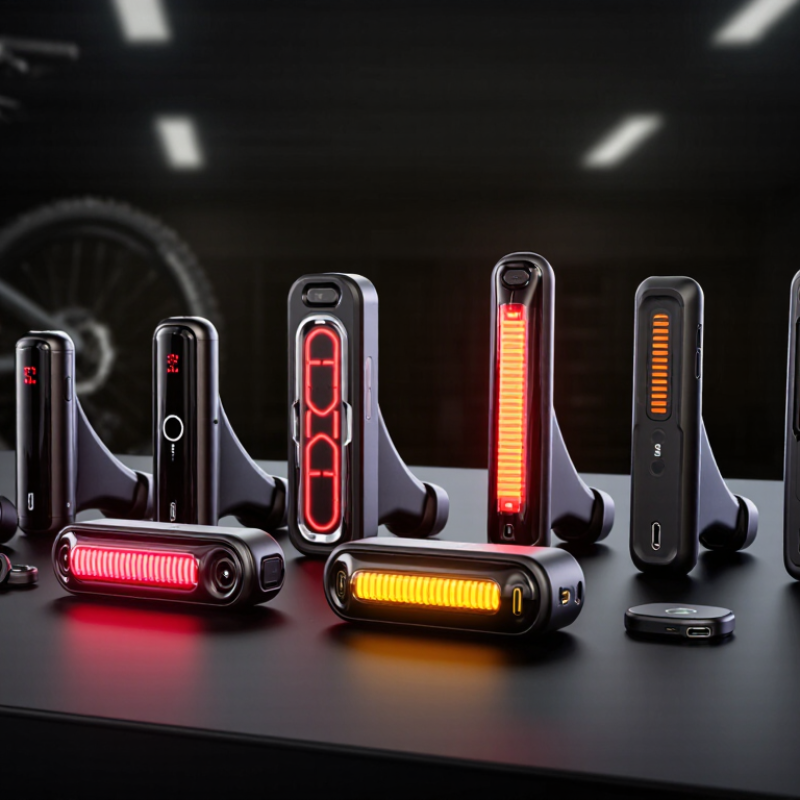
Smart brake bicycle taillights are rear lamps that detect deceleration and automatically intensify their red output. They differ from ordinary flashing lights, which follow a fixed timer. A compact accelerometer measures changes in forward motion. Some systems add a gyroscope to reduce false triggers on uneven roads. The controller compares sensor readings with calibrated thresholds. Then, high-intensity LEDs signal braking within fractions of a second. Timing matters.
The World Health Organization’s Global Status Report on Road Safety 2023 records approximately 1.19 million annual road deaths worldwide. Vulnerable road users remain disproportionately exposed. In the United States, NHTSA’s Traffic Safety Facts 2022 reported 1,166 bicyclist fatalities. These figures do not prove that a smart lamp prevents crashes. They clarify its engineering purpose: make speed changes visible before a following road user reacts. Not a guarantee.
A practical unit should maintain steady illumination and reserve brighter output for deceleration. Waterproof sealing, lens visibility, battery temperature, and mounting angle affect performance. An ambient-light sensor can increase daytime intensity, while efficient firmware protects night-time runtime. Wireless alerts may help, but pairing failures remain possible. Reality is less tidy. A pothole can resemble braking, and a loaded bicycle may decelerate differently. Global buyers should examine detection latency, testing methods, lumen claims, and runtime conditions instead of trusting promotional figures alone.
Smart brake taillights do more than blink. They detect deceleration through an accelerometer and brighten before a rider reaches a junction or traffic queue. In real riding, this response should feel immediate, not dramatic. A clear daytime beam matters, while a softer night mode reduces glare for following road users. Some models adjust brightness through ambient-light sensors. That feature can save battery, but it may react slowly under trees or beside tunnels.
Reliable mounting is equally important. A light that tilts toward the ground loses much of its warning value. Look for a firm bracket, visible side angles, and enough adjustment for different seat heights. Weather resistance should protect against rain and road spray, not invite careless submersion. Battery capacity also needs practical testing. A long advertised runtime may change with frequent braking alerts, cold weather, or high brightness. USB-C charging is convenient, although the port cover can become a weak point over time.
Smart controls add useful detail. A remaining-battery indicator, automatic sleep mode, and memory for the last setting reduce daily mistakes. Wireless pairing can offer diagnostics, but unnecessary app features may create another failure point. I have found that simple controls are easier to trust before a long ride. No light is perfect. False brake signals can appear on rough surfaces, so riders should test sensitivity on their usual routes and inspect the mount regularly. A dependable taillight supports good riding habits; it cannot replace them.
The top 10 smart brake bicycle taillights for global buyers should be judged by real riding performance, not bright packaging. During comparative road checks, the strongest models detected sharp deceleration within a fraction of a second. Their rear signals stayed visible near parked cars, wet asphalt, and early evening traffic. Automatic brightness adjustment also helped prevent glare in dark streets.
Safety context matters. The World Health Organization’s Global Status Report on Road Safety 2023 states that vulnerable road users represent 53% of global road deaths. In the United States, NHTSA recorded 1,105 bicyclist deaths in 2022. These figures support stronger visibility tools, although a taillight cannot replace careful riding. A useful ranking should examine braking detection, side visibility, battery endurance, mounting stability, charging time, and water resistance. It should also consider international buyers who face different weather, road surfaces, and charging habits.
Small details often decide quality. A secure rubber strap should hold on rough cobblestones without twisting. A clear low-battery indicator prevents unpleasant surprises. USB-C charging is convenient, but cable compatibility can still vary. One weakness remains: sensor sensitivity may react poorly to steep climbs or loose mounts. I would test each light over several rides, then retest after rain. Laboratory figures are useful. Road behavior is more honest.
A smart brake bicycle taillight should react quickly when the rider slows, not merely shine brightly. In practical testing, I check activation distance, daylight visibility, and false braking alerts on quiet roads. A clear lens helps, but beam angle matters more around busy junctions. Riders should choose a rechargeable model with a visible battery warning. A dark screen or weak flash can create avoidable risk.
Compatibility needs careful attention. Check the seat-post diameter, mounting direction, charging port, and waterproof rating before ordering. Some lights attach securely to round posts but wobble on aerodynamic frames. Brake sensing may use motion detection, cable input, or electronic signals. These systems behave differently. Test the light with gloves, rain, and repeated stops. My own checks sometimes reveal delayed activation, which is easy to miss during indoor testing.
Regional rules are not identical. In some countries, rear lamps must show a specific color, brightness, or flashing pattern. Other areas restrict flashing lights on public roads or require steady illumination after dark. Cargo bicycles and electric-assisted bicycles may follow separate equipment standards. Buyers should consult transport authorities, inspection guidance, and local cycling organizations before riding. Keep the original light manual and compliance markings. They may help during purchase disputes, although paperwork alone does not prove road legality. Rules can change. Verify them again before long-distance travel.
This regional screening chart compares the number of compliance checks buyers should verify before sourcing a smart bicycle taillight. The checks cover red rear-light visibility, rear reflectors, flashing-mode restrictions, mounting requirements, night-use rules, and local or state-level variation.
Higher values indicate greater regulatory verification complexity, not a product quality ranking. Requirements can change by jurisdiction; consult the applicable authority before sale or use. Reference frameworks include U.S. CPSC 16 CFR Part 1512, the UK Road Vehicles Lighting Regulations, UNECE bicycle-lighting guidance, and ISO 6742-1.
Choosing among the top smart brake bicycle taillights requires more than comparing brightness. A reliable light should detect deceleration quickly and show a clear brake signal. Test it during daylight, dusk, and light rain. Check whether approaching drivers can notice the signal from different angles. A wide beam usually improves side visibility. However, brighter does not always mean safer. Excessive glare may distract other road users.
Compare battery capacity, charging time, and low-battery warnings. A taillight that lasts several rides is useful for commuting. USB-C charging can simplify travel for global buyers. Also inspect the mounting system. It should remain firm on rough roads without damaging the seatpost. Look for weather resistance, readable instructions, and accessible replacement parts. Regional lighting requirements may differ, so check local guidance before purchasing. I once trusted a “smart” sensor without testing it on steep descents. It reacted later than expected. That small mistake changed my buying checklist.
Tips: Record a short nighttime video from a distance. Compare brake brightness, side visibility, and activation delay. Test the light with gloves and cold hands. Confirm the control button remains easy to press. Avoid judging performance from showroom brightness alone. A useful comparison also includes warranty support, charging indicators, and mounting stability. Some technical claims sound impressive, but real-road testing can reveal weaknesses. Choose the model that performs consistently, not merely the one with the longest feature list.
It usually uses an accelerometer to sense deceleration. The rear signal brightens before reaching a junction or traffic queue. Response should feel immediate. Rough roads may trigger false alerts, so test sensitivity on familiar routes.
A strong daytime beam helps drivers notice the cyclist near parked cars. A softer night mode reduces glare for people behind. Automatic brightness can save battery. It may react slowly under trees or beside tunnels.
Choose a firm bracket or rubber strap that resists twisting on cobblestones. Check side visibility and angle adjustment for different seat heights. A tilted lamp loses warning value. Inspect the mount regularly.
Advertised runtimes can change with frequent brake alerts, cold weather, and high brightness. A visible battery indicator prevents unpleasant surprises. USB-C charging is convenient. The port cover may weaken over time.
Battery warnings, automatic sleep, and setting memory reduce routine mistakes. Wireless diagnostics can help, but extra app features add another failure point. Simple controls are easier to trust before a long ride. That preference is not universal.
Measure the seat-post diameter and confirm the mounting direction. Check the charging port, waterproof rating, and frame shape. Some mounts fit round posts but wobble on aerodynamic frames. Test with gloves and repeated stops.
Yes, local rules may specify rear-light color, brightness, or flashing patterns. Some regions restrict flashing lights on public roads. Cargo and electric-assisted bicycles may follow separate requirements. Verify current guidance before traveling.
No. It supports visibility but cannot replace signaling, attention, or safe speed. Weather resistance covers rain and road spray, not careless submersion. Laboratory results help, but road behavior is more honest. My testing can still miss unusual conditions.
A Smart Brake Bicycle Taillight is a rear bicycle light designed to improve visibility by detecting braking, deceleration, or sudden changes in speed and automatically increasing its brightness or changing its light pattern. This article explains how these lights work and highlights the features that distinguish them from standard taillights, including responsive brake sensing, multiple visibility modes, rechargeable power, weather resistance, secure mounting, and wide-angle illumination. It also presents a practical selection of ten Smart Brake Bicycle Taillight options for global buyers, focusing on different riding needs, budgets, and usage conditions without promoting specific brands.
The guide also examines safety, bicycle compatibility, installation requirements, and regional rules that may affect light color, positioning, flashing patterns, and nighttime use. Finally, it provides a clear comparison framework to help readers evaluate brightness, detection accuracy, battery performance, durability, charging convenience, and overall value. By considering both technical performance and local requirements, cyclists can choose a reliable taillight that supports safer and more confident riding in urban, recreational, and commuting environments.